
Sewer Line Slope: 4 Things That Happen When It’s Wrong
Most homeowners never think about the angle at which their sewer pipe sits underground, and that changes the moment something goes wrong. Sewer line slope plays a critical role in how well every residential drainage system functions. Too flat and waste stops moving. Too much slope and water races ahead of solids, leaving debris behind. If your system is already showing signs of trouble, getting a professional assessment through a thorough underground pipe evaluation and repair can reveal whether slope is part of the problem.
What you’ll learn:
- Why sewer line slope matters more than most homeowners realize
- The four specific problems that occur when slope is incorrect
- How to recognize the warning signs of a slope-related issue
- What causes slope problems in the first place
- How slope issues are diagnosed and corrected by professionals

The Role Proper Slope Plays in a Healthy Sewer System
Gravity is the engine that drives every residential sewer system. Unlike pressurized water supply lines, drainage pipes rely entirely on a consistent downward angle to move wastewater from your home to the municipal main. The ideal slope for a sewer line is 1/4 inch per foot of run. For larger pipes with a diameter of 4 to 6 inches, a minimum slope of 1/8 inch per foot is sometimes acceptable, but for most residential sewer lines, 1/4 inch per foot remains the standard.
Flow velocity inside a properly sloped pipe needs to stay between 2 and 10 feet per second. Below that range, solids drop out of suspension and accumulate. Above 10 feet per second, flow becomes turbulent enough to erode the pipe and separate liquids from solids just as effectively as a line that is too flat. Here is why proper pitch matters so much for homeowners:
- Waste movement depends on it: Solid waste and water need to travel together at the right speed. Incorrect slope separates them, leaving solids stranded in the pipe where they accumulate and cause blockages.
- Clogs become a recurring problem: A sewer pipe with poor slope does not just clog once. It creates conditions for repeated backups. Properly sloped lines rarely need mechanical snaking or hydro-jetting to stay clear.
- Damage compounds over time: Stagnant wastewater encourages anaerobic bacteria growth, which creates corrosive byproducts that deteriorate the pipe material from the inside out. Fats, oils, and grease solidify quickly in a shallow pipe, compounding buildup with every use.
- Repairs get more expensive the longer it goes: Slope problems caught early can often be corrected with targeted trenchless work. Left unaddressed, they escalate into full replacements. Sewer systems with correct pipe grading can last 40 to 100 years, while those with chronic slope issues deteriorate far ahead of schedule.
Understanding proper slope as a foundational issue is the first step toward protecting your sewer system long-term. Homeowners in Bothell and surrounding areas with older properties are particularly likely to encounter this problem, since years of ground movement and soil settling can alter a pipe’s angle well after installation.
4 Things That Happen When Sewer Line Slope Is Wrong
Incorrect slope does not produce one single type of failure. It creates a cascade of distinct problems, each with its own symptoms and consequences. The following four outcomes are the most common results of a sewer line that sits at the wrong angle.
1. Solid Waste Accumulates Inside the Pipe
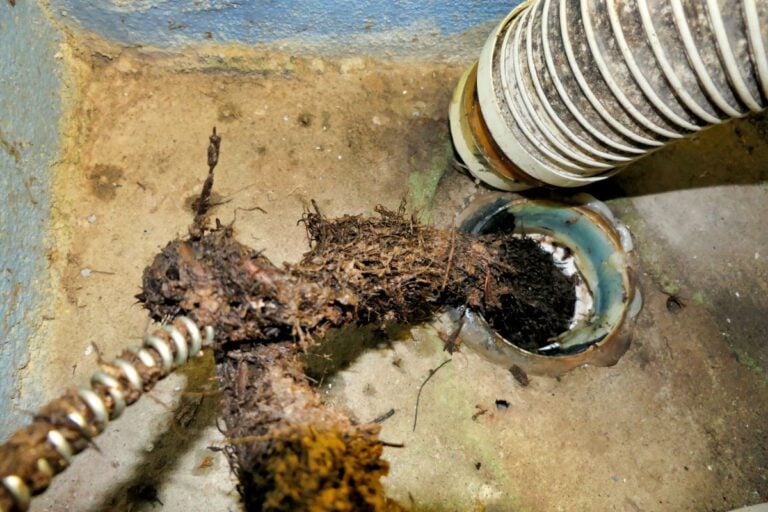
When a sewer line is too flat, wastewater moves through the pipe too slowly to carry solid waste along with it. The flow rate drops below the minimum needed to keep solids in suspension, so liquids drain ahead while solids settle and build up along the bottom of the pipe. Over time, this accumulation hardens into a dense blockage that drain cleaning may clear temporarily but will not resolve permanently. A flat line also creates stagnant moisture that attracts tree roots, adding a compounding risk beyond buildup alone.
- Fats, oils, and grease solidify fast in a flat or shallow pipe section
- Recurring clogs in the same pipe section are a strong indicator of a slope problem
- Hydro jetting can remove existing buildup, but without correcting the slope, the problem returns
2. Water Outpaces Solids When There Is Too Much Slope
The opposite problem occurs when a pipe is installed or has settled at too steep an angle. When slope exceeds the maximum allowable pitch of 1 inch for every 4 feet of run, water moves through so quickly that solid waste cannot keep pace. Solids are left behind in sections of the line that should be self-cleaning, a phenomenon sometimes called “scouring.” Too much slope leads to the same end result as too little: accumulated waste where it should never have stopped.
- Flow rates above 10 feet per second are a red flag in standard residential systems
- Pipes improperly installed or significantly shifted over time are most at risk
- The only reliable fix is to regrade the affected pipe section to achieve proper pitch
3. Sewer Gases Back Up Into the Home
Accumulated waste inside a pipe that is not draining correctly creates conditions for sewer gas production. Hydrogen sulfide and methane build up inside a sewer line where waste is sitting rather than moving. Proper drainage prevents this by eliminating the structural traps where toxic gases accumulate and find their way back through drain traps into living spaces. Homeowners in Bothell and surrounding areas who notice persistent sewage odors at a sink or elsewhere in the home without an obvious cause should consider slope as a contributing factor.
- Sewage odors in multiple rooms simultaneously point to a main line issue rather than a single fixture
- Gas buildup inside a sewer pipe can be a health concern beyond the unpleasant smell
- Correcting the slope removes the conditions that allow gas to accumulate
4. Pipe Damage and Structural Failure Accelerate
Waste that sits in a pipe does not just smell bad. It creates a chemically aggressive environment. Hydrogen sulfide reacts with moisture to produce sulfuric acid, which erodes clay pipe interiors and deteriorates the joints of cast iron and PVC sewer lines. Stagnant water also encourages anaerobic bacteria growth, accelerating biological degradation alongside the chemical erosion. A sewer pipe carrying pooled waste for years is far more vulnerable to cracking, joint separation, and collapse than one maintained at proper slope.
- Clay pipe is especially vulnerable to acid-driven interior erosion from stagnant waste
- Joint failures often begin in sections where pooling is chronic and flow velocity is minimal
- Ground shifting that altered the slope may continue, worsening the angle further
Each of these four outcomes tends to reinforce the others. A pipe that accumulates solids also produces more gas. A pipe that erodes internally develops joint gaps that invite root intrusion. What starts as a slope problem often becomes a compound failure if it is not identified and corrected in time.

How Slope Problems Develop in the First Place
Incorrect sewer line slope is not always the result of a bad installation. In many cases, the pipe was installed correctly and the slope changed over time due to factors outside the homeowner’s control. Sewer lines with incorrect slope require more frequent cleaning than those held at the proper grade, which is one of the clearest signs that something structural is working against the system.
Soil Settlement and Ground Movement
Soil beneath a sewer line is rarely completely stable over decades. Moisture variation causes clay soils to expand and contract, sandy soils to shift and erode, and compacted fill to settle unevenly under the pipe. As the ground moves beneath a gravity drainage system, the pipe’s angle adjusts with it, and a properly graded installation can develop low spots, high points, or a complete belly where waste begins to pool.
Pipe Bellies
A pipe belly is a section of sewer line that has sagged below the intended grade, creating a low point where water and waste collect instead of flow through. Bellies are one of the most common slope-related findings on a camera inspection, almost always caused by soil movement rather than installation error. Once a belly forms, it does not self-correct, and the pooling it creates accelerates deterioration in that section of the pipe. Homeowners in Bothell and surrounding areas often discover bellies during inspections of pipes that have been in the ground for 30 or more years.
Original Installation Errors
In some cases, the proper pitch was never established to begin with. Pipes installed without laser leveling or grade checks can leave a home with a sewer line that was always at the wrong angle, and the resulting problems may not become obvious for years. By the time recurring clogs and slow drains make the issue clear, the pipe has often been silently deteriorating for a long time.
Knowing the cause helps a professional predict which sections of the line are most likely to be affected and prioritize the inspection accordingly, whether the root issue is ground movement or an original installation error. In either case, the solution begins with a clear picture of what is happening inside the pipe.
How Professionals Diagnose and Correct Slope Issues
Diagnosing a slope problem requires more than snaking a drain or running water through the line. It requires a camera inspection that captures the visual condition of the pipe interior and the grade data needed to identify where the sewer line sits relative to where it should. Most professional sewer inspection tools can detect bellies, high spots, and slope anomalies in a single pass through the drainage pipe.
What a Camera Inspection Reveals
A sewer camera inspection provides a direct view of conditions inside the pipe and allows a technician to identify pooling, accumulated waste, and structural deformations that indicate a slope issue. The inspection also rules out other causes of slow drains and backups, such as root intrusion or a collapsed section, so the correct repair method can be selected without guesswork.
Repair Options for Slope Correction
| Situation | Likely Repair Approach |
| Isolated pipe belly, otherwise intact | Spot excavation and regrade |
| Multiple bellies along a long run | Trenchless pipe lining to restore flow path |
| Severely misgraded original installation | Full section replacement with correct grade |
| Belly combined with root intrusion or cracks | Comprehensive repair addressing both issues |
Not every slope problem requires full excavation. Trenchless methods can often restore adequate flow without disturbing the yard, but the right approach depends on the severity and location of the slope deviation. A camera inspection gives both the homeowner and the contractor the information needed to make that call with confidence.

When Your Drains Are Trying to Tell You Something
Sewer line slope problems rarely announce themselves clearly at first. The early signs tend to look like ordinary plumbing inconveniences: slow drains, occasional gurgling, a faint odor that comes and goes. It is only over time, as the underlying condition worsens, that the symptoms become impossible to ignore. Correct pipe grading reduces the lifetime cost of a waste system significantly, which means catching a slope issue early versus waiting for a backup can be measured in thousands of dollars.
Brewer Sewer helps homeowners throughout Bothell and surrounding areas understand what is actually happening inside their sewer system, not just what the symptoms suggest at the surface. If your drains are behaving in ways that do not add up, or if you have an older home and have never had a sewer inspection, contact us today to schedule a camera inspection and get a clear picture of your line’s condition.