

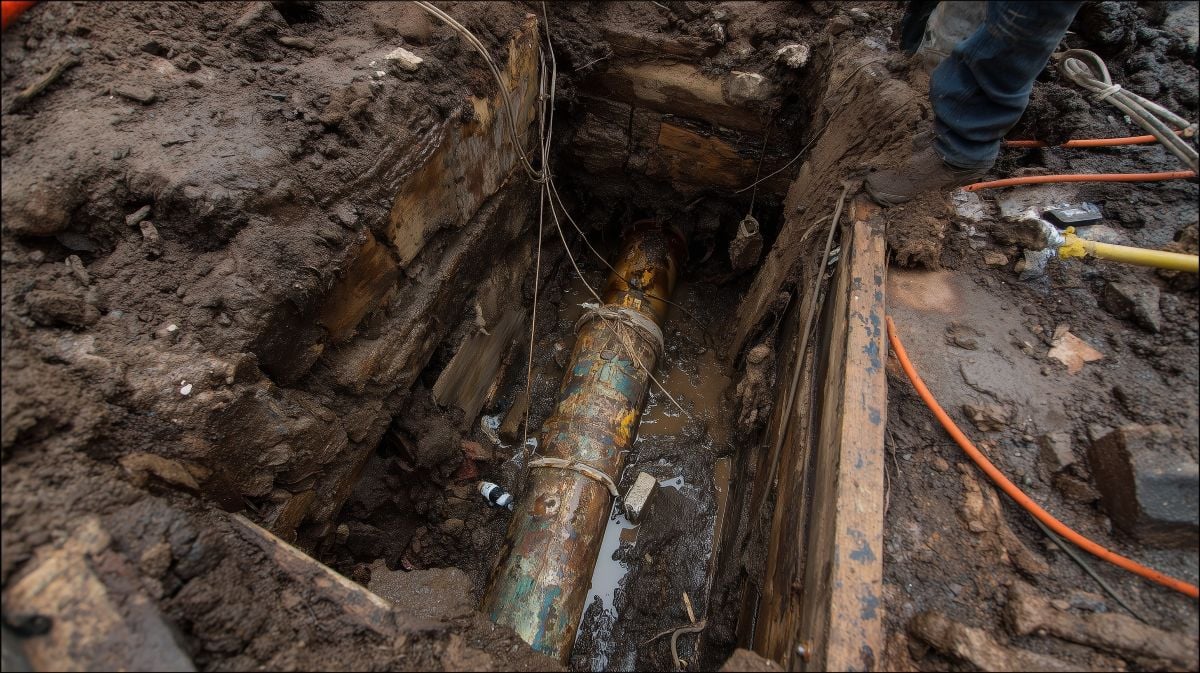
Sewer Line Collapse: 7 Warning Signs You Shouldn’t Ignore
Your home’s sewer system works silently underground, and most homeowners never think about it until something goes seriously wrong. A sewer line collapse is one of the most damaging and costly plumbing emergencies a homeowner can face, and the warning signs often show up long before the full failure happens. Knowing what to look for can save you thousands of dollars and protect your property from severe structural damage. If you are already noticing problems, exploring your options for professional underground pipe restoration and repair sooner rather than later is always the right move.
What you’ll learn:
- The most common warning signs that a sewer line is failing or has already collapsed
- Why acting early matters for your home’s safety and your wallet
- What causes sewer lines to collapse in the first place
- How to tell the difference between a minor clog and a serious structural problem
- What steps to take if you suspect a collapse under your property

Why a Collapsed Sewer Line Is a Bigger Deal Than You Think
Many homeowners in Bellevue and surrounding areas assume that slow drains or occasional backups are minor inconveniences. In reality, these symptoms can be the first indicators of a collapsing sewer line that requires immediate attention. Ignoring them even for a short time can allow the problem to escalate from a repair into a full excavation and pipe replacement project.
- Property damage compounds fast: Once a sewer line collapses, wastewater has nowhere to go except back into your home or into the surrounding soil, which can saturate your foundation and create serious structural issues.
- Health hazards become a real concern: Raw sewage backing up into your home introduces bacteria, pathogens, and toxic gases that pose genuine risks to everyone inside.
- Repair costs grow with time: A partial collapse caught early is far less expensive to address than a complete failure that has been allowed to worsen over weeks or months.
- Landscaping and hardscaping suffer: Water pooling underground from a collapsed line can destroy lawns, shift driveways, and crack sidewalks.
The bottom line is that your sewer line is not a system you can afford to monitor casually. Understanding the warning signs is the first line of defense for any responsible homeowner.
7 Warning Signs of a Sewer Line Collapse
Some of these signs are subtle at first, while others are hard to miss once they appear. Sewer line collapses typically result from years of cumulative environmental and structural stress. The key is knowing what you are looking at so you can act before the problem advances to a point where far more invasive and expensive work becomes unavoidable.
1. Multiple Drains Backing Up at the Same Time
When a single drain in your home is slow, the problem is usually localized, perhaps a simple clog in that particular drain line. However, when two or more drains begin backing up simultaneously, especially in different areas of the home, that is a strong indicator that the main sewer line is compromised. This pattern means wastewater has nowhere to exit the home and is finding the path of least resistance back through your fixtures.
- Watch for toilets, sinks, and showers all draining slowly at once
- Flushing a toilet that causes a nearby tub to gurgle is a textbook sign
- Multiple backups appearing suddenly after no prior issues should raise immediate concern
This pattern almost never resolves on its own. If you are seeing it in your home, the main line deserves a professional look as soon as possible.
2. Sewage Odors Inside or Around Your Home
A properly functioning sewer system is entirely sealed. If you are detecting the unmistakable smell of sewage inside your home or in your yard, the line is not sealed. Sewer gases escaping into your living spaces are not just unpleasant, they can include methane and hydrogen sulfide, both of which are hazardous. Persistent odors in your basement or near floor drains deserve prompt investigation, not just an air freshener.
3. Gurgling Sounds and Strange Sounds From Your Plumbing
Gurgling sounds from your drains and toilets indicate air is trapped in the sewer line. This happens when a collapse or blockage disrupts the normal flow of wastewater and forces air backward through the system. Many homeowners in Bellevue and surrounding areas dismiss these strange sounds as minor quirks of an older home, but they are one of the clearest early signals that something is structurally wrong underground.
- Gurgling sounds after flushing are a red flag
- Strange sounds that appear in one fixture when another is used suggest a shared line problem
- Intermittent gurgling sounds that become more frequent over time indicate a worsening condition
If these strange sounds are becoming a regular part of life in your home, that progression is a signal that the underlying problem is getting worse, not stabilizing on its own.
4. Soggy or Sunken Patches in Your Yard
If you notice low spots, consistently wet areas, or patches of grass that are unusually lush compared to the rest of your lawn, a leaking or collapsed sewer pipe beneath the surface may be the cause. Escaping wastewater saturates the soil and acts as a fertilizer in concentrated areas, producing greener grass directly above the damaged line. Over time, the soil erosion caused by the leak can cause the ground itself to sink, creating visible depressions in your yard.
5. Foundation Cracks or Shifting
This is one of the more severe signs, and it typically indicates a collapse has been underway for some time. When a broken sewer line runs beneath or near your home’s foundation, the constant release of water erodes the soil that supports the structure. As that soil washes away, the foundation begins to settle unevenly, which shows up as new cracks in walls, ceilings, or flooring. Doors and windows that suddenly stick or no longer close properly can also be traced back to foundation movement caused by an underground pipe failure.
- Horizontal cracks in a concrete foundation are especially serious
- Cracks that appear suddenly and grow over a short period warrant immediate evaluation
- Sticking doors combined with wet yard patches suggest a sewer problem, not just settling
Foundation damage is among the costliest consequences of a long-ignored sewer failure. If you are seeing these signs together, getting a sewer camera inspection scheduled right away could save you from a much larger structural repair bill down the road.

6. Slow Drains That Do Not Respond to Standard Clearing Methods
Every homeowner deals with slow drains from time to time, and most clogs respond to a plunger or a basic drain cleaner. When slow drains persist despite multiple clearing attempts, or when they return within days of being cleared, the issue is almost certainly not a standard clog. A collapsed or severely damaged sewer line creates a blockage that no amount of chemical treatment or plunging can resolve. Repeated service calls for the same slow drain problem are a sign that a deeper inspection is overdue.
7. An Infestation of Sewer Pests
Rats and certain insects, particularly cockroaches, use sewer lines as travel routes throughout urban and suburban environments. A collapsed section of pipe creates an opening that these pests can exploit to enter your home’s plumbing network. If you are suddenly dealing with rodent activity or cockroach infestations in a home that has not previously had these problems, a compromised sewer line may be providing them a point of entry. Pest control alone will not solve the underlying issue if the line remains broken. Addressing the sewer pipe damage directly is the only way to close off the entry point for good.
Any one of these warning signs on its own warrants attention. When two or more appear together, the urgency increases significantly. A sewer camera inspection at that point is not optional — it is the responsible next step for protecting your home.
What Actually Causes Sewer Lines to Collapse
Understanding the causes helps homeowners recognize whether their property is at elevated risk. Several factors contribute to sewer line failures, and many of them are more common than people realize in older residential neighborhoods throughout Bellevue and surrounding areas.
- Tree root intrusion is among the leading causes of sewer line damage. Tree roots naturally seek moisture, and they are remarkably effective at finding and penetrating the joints and small cracks in aging pipe materials. Once inside, roots grow and expand until they fracture or fully block the pipe.
- Aging pipe materials also play a major role. Homes built before the 1980s often have clay or cast iron sewer lines that have been in the ground for decades. These materials deteriorate over time, becoming brittle and prone to cracking under normal soil pressure.
- Ground movement and soil shifting can apply external stress to sewer lines, particularly after heavy rain, freeze-thaw cycles, or nearby construction activity. Even minor earthquakes or the vibration from heavy vehicles on the road can accelerate damage in already-weakened pipes.
- Corrosion from chemical buildup occurs when certain cleaning agents, grease accumulations, and mineral deposits gradually degrade the interior of the pipe. This is especially common in homes where non-flushable wipes or excess grease have entered the system over many years.
In many cases, more than one of these factors is at work simultaneously, which is why a sewer pipe that has been holding up for decades can seem to fail suddenly. The deterioration often builds quietly over a long period before the visible symptoms finally appear.
How to Tell If You Need Repair or Full Replacement
Not every warning sign means your entire sewer line needs to come out. The extent of the damage determines the appropriate response, and a professional sewer camera inspection is the only reliable way to assess the situation accurately. That said, some general guidance can help homeowners understand what they may be facing.
| Situation | Likely Solution |
| Single blockage, no structural damage | Hydro jetting or rooter service |
| Partial crack or root intrusion | Trenchless pipe lining or spot repair |
| Collapsed section of pipe | Spot excavation and pipe replacement |
| Multiple collapses or severe deterioration | Full sewer line replacement |
| Foundation damage already present | Full replacement with site remediation |
Trenchless repair methods, including pipe lining and pipe bursting, have become standard options for many situations that would previously have required significant excavation. These methods are faster, less disruptive to your landscaping, and often more cost-effective. However, they require that enough pipe structure remains intact to work with, which is another reason why catching the problem early matters so much.
If a sewer camera inspection reveals widespread deterioration, full replacement may be the most practical and economical long-term solution rather than sewer line repair alone. A qualified technician can walk you through the options and help you understand the scope and cost before any work begins.

Protect Your Home Before a Small Problem Becomes a Catastrophe
A sewer line collapse rarely happens overnight. The warning signs are usually present for weeks or months before a full failure occurs, and homeowners who recognize them early are in a much better position to protect their property, their budget, and their family’s health. Brewer Sewer has been helping homeowners in Bellevue and surrounding areas diagnose and resolve sewer line problems with honest assessments and proven solutions. Do not wait for a full collapse to force the issue. Contact us today to schedule an inspection and get clear answers about the condition of your sewer line.